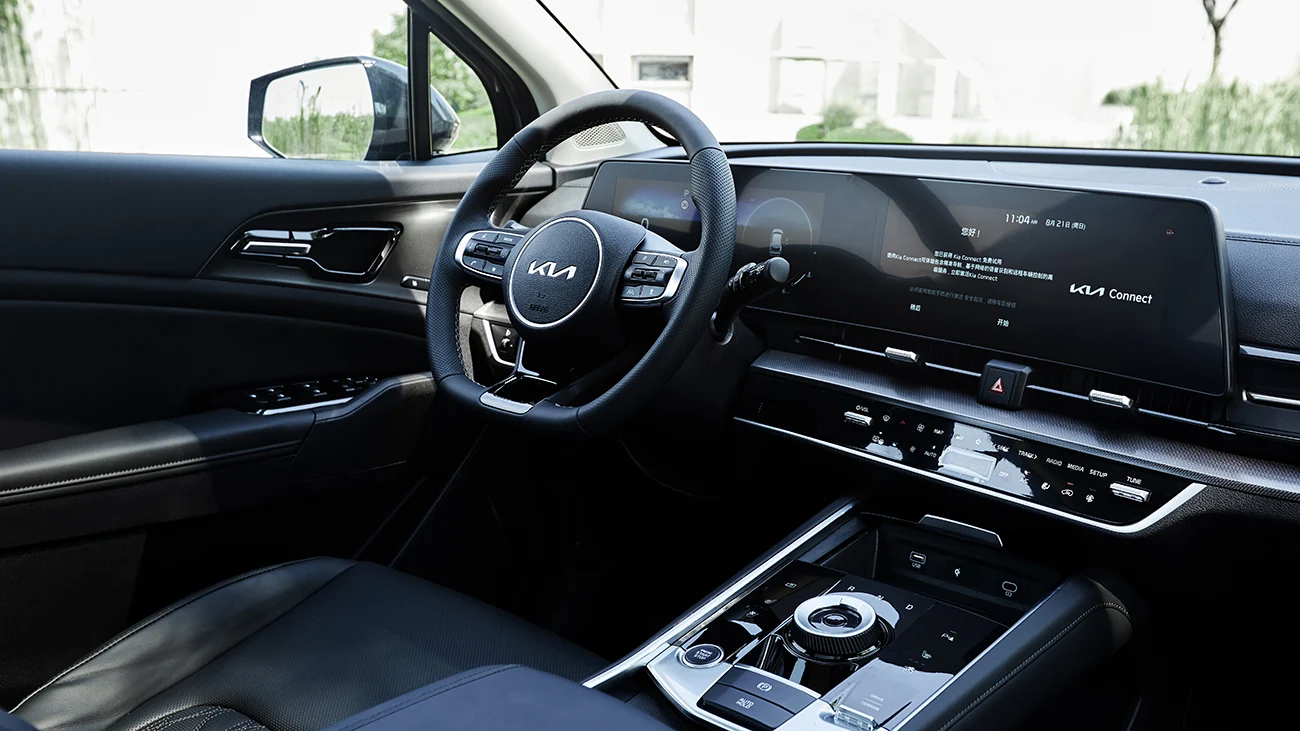
Confirm the roof fitted to the actual car
Ask for the original equipment record and photographs of the offered vehicle. Do not infer an opening panoramic system from dark roof paint, a styling package or another trim’s brochure image. The seller should identify the fitted functions and any disclosed alterations. A factory specification establishes what was originally supplied, while an inspection establishes what is present and operating now.
The Sportage equipment review keeps those questions separate. Kia China’s 2025 release describes panoramic-roof additions for particular comfort-oriented variants, illustrating why trim context matters. That does not establish the same roof on all earlier or later cars. If the buyer requires the feature, name it explicitly rather than relying on a translated premium-trim label to communicate the requirement.
Observe normal operation without forcing the mechanism
Have an authorised demonstrator operate the roof and shade through the normal controls under suitable conditions, following the applicable instructions. Ask whether the observed motion is consistent and whether unusual noises, warnings or interruptions occur. Keep fingers and objects away from the mechanism; do not arrange an improvised obstruction test to demonstrate a protective function for a sales video.
Record exactly which functions were checked. If the roof could not be operated because of the car’s condition, weather or another limitation, leave it unconfirmed. A seller’s promise that it usually works should not replace the missing observation. If operation is abnormal, request a qualified assessment before repeatedly cycling or forcing the system in an attempt to produce a successful recording.
Inspect visible glass and surrounding trim
Ask the assessor to describe accessible glass condition, seal appearance, trim alignment and signs of previous work. Chips, cracks, unusual gaps or loose trim should be identified by location. A small photograph taken from a distance may hide relevant detail, so request focused evidence where a finding needs explanation rather than trying to diagnose the whole assembly remotely.
If glass or roof components were replaced, obtain available invoices and the reason for the work. A replacement can be a legitimate completed repair; its presence alone does not prove major structural damage. The complete vehicle assessment provides the wider context. Keep cosmetic observations separate from any concern that requires a body or roof specialist’s evaluation before purchase acceptance.
Treat dampness as a finding that needs a cause
Include accessible headlining, pillars, carpet and luggage areas in the cabin assessment. Ask about reported leaks, odours or previous water-related work, and distinguish those statements from current observations. A stain does not by itself identify a roof leak, and a recently dried cabin does not establish that a reported water-entry problem has been resolved.
A qualified provider should determine which inspection or controlled test is appropriate to the symptom and vehicle. Do not tell the seller to pressure-wash seals, probe drains or dismantle trim without the correct procedure. Record what was examined and any limitation. If the cause remains uncertain, keep that question open in the condition report instead of turning an attractive roof feature into an unsupported dry-cabin guarantee.
Price a diagnosed remedy and its verification
A useful estimate identifies the actual fault, proposed parts or adjustment, labour and the relevant checks after work. Do not assume that replacing a seal will remedy every noise or leak, or that a complete roof assembly is required because one function has stopped. Diagnosis and parts supply should be linked to the specific vehicle and reported concern.
Use the preparation budget to compare completed work with an offer that leaves repair responsibility to the buyer. Request the provider’s completion record and a recheck of the original symptom where appropriate. If the buyer accepts a discount instead, disclose the unresolved condition in the final vehicle description. A lower price changes the commercial decision; it does not demonstrate a repaired roof.
Decide whether the feature is essential or optional
Ask whether the customer needs a panoramic roof or would prefer a different verified specification with stronger condition evidence. Some buyers may value the feature enough to accept defined preparation; others may prefer another candidate. The decision should reflect the actual findings and customer priorities, not a universal claim that every panoramic roof is troublesome or that a higher trim is automatically better.
Send Panda the accepted roof requirement, condition preference and evidence expected before handover. New vehicles also need delivery-condition and normal-function checks, while used offers add repair and use history. Keep the final observations and agreed work with the handover record. If another unit is substituted, reassess its own roof rather than transferring the first car’s demonstration or repair paperwork.