Start with the two dated line-ups
Kia China’s April 2025 release describes 1.5T and 2.0T petrol versions with eight-speed automatics, plus a 2.0L HEV with six-speed automatic. Its March 2026 new Sportage release lists 1.5T and 2.0T with eight-speed automatics. Keep each statement within that release’s market and date.
The later release does not establish that all earlier hybrids are unavailable as used cars. Equally, a 2025 HEV specification should not be copied into a 2026 new-car proposal without vehicle-specific evidence. Use the China Sportage identity guide to separate production, model-year description and registration.
Compare the body version explicitly
Ask for the original designation and photographs of the actual candidate’s front, rear and cabin. Identify the facelift rather than relying on the registration year alone. A vehicle first registered after an update can still belong to an earlier specification, and a modified appearance needs separate disclosure.
The lamp and body-parts matching guide helps turn the version distinction into a support enquiry. For a dealer planning parts support, retain the body-version information with the vehicle record. A supplier’s broad Sportage label is not enough to establish lamp, trim or electronic-component compatibility. Ask the receiving workshop to match any anticipated replacement to the actual application before allowing for it in a fixed budget.
Verify the features that change the decision
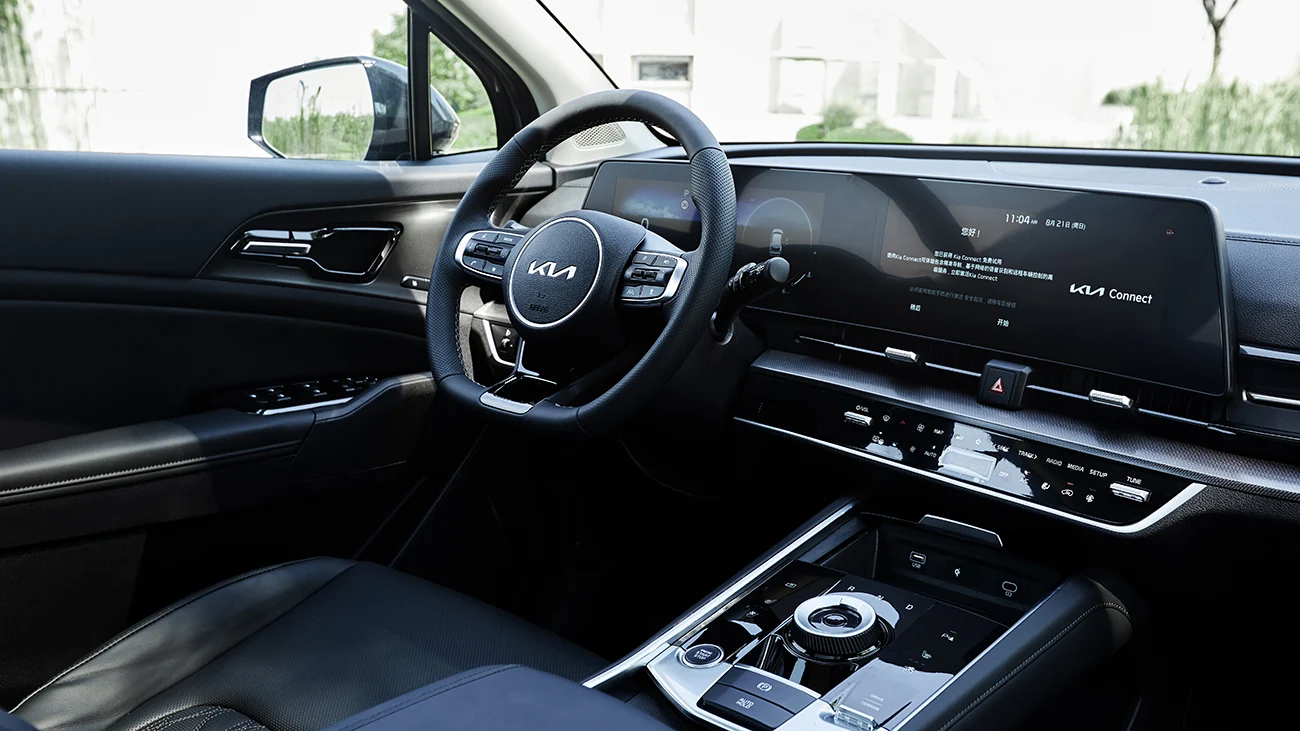
The March 2026 China release describes ccNC and wireless CarPlay/CarLife. That is a dated model reference, not proof of every function on an individual proposal or a promise that regional online services work after export. Request the required connection and controls to be demonstrated on the selected vehicle.
Use the equipment checklist to separate factory specification, installed accessories and verified operation. If the customer requires a particular assistance or comfort function, identify its applicable trim and confirm it physically. An announcement showing a well-equipped example should not be treated as the standard equipment list for every offer.
Keep petrol and hybrid comparisons complete
If the customer accepts an earlier HEV, use the petrol and hybrid buying review to compare condition, support and use. Do not attribute an entire price or fuel difference to the facelift when the powertrains also differ. List the engine, transmission and drive arrangement on each row.
For a new petrol proposal and a used hybrid, show the condition routes separately. The older car’s service and battery assessment are part of its own evaluation. The newer car still needs production, equipment and delivery evidence; its later description should not replace checks on the actual vehicle offered.
Compare price on the same commercial basis
Ask each supplier to identify what is included in the quoted figure and which costs remain separate. Dated domestic retail promotions do not establish today’s export quotation. Avoid taking a launch headline as the vehicle price available for a different customer, destination or purchase arrangement.
Record preparation, supplied items and transfer scope beside the vehicle specification. A lower-priced earlier candidate may be suitable if it meets the customer’s needs and its work is understood. A later version may justify a premium for required features, but the premium should be evaluated against demonstrated benefits and confirmed terms.
Use a feature-led shortlist
Suppose a customer specifically needs a demonstrated phone connection and an agreed cabin language. Assess those requirements first, then compare condition and price among candidates that satisfy them. Choosing only by the model-year label can leave a required function unresolved even after the preferred facelift has been selected.
For another customer, a documented used HEV with suitable support may remain worth considering. Keep that as a distinct alternative with its own records. Do not describe it as equivalent to a later petrol car merely because both belong to the same broad Sportage family or appear under one stock category.
Write the accepted version clearly
Send Panda the destination, quantity, accepted years and whether new, used or both are suitable. Name mandatory equipment and any powertrain restrictions. Ask for the complete version description and supporting evidence before using the proposal in a retail advert or allocating it to a customer.
If a substitution changes the facelift, engine or fitted system, revisit the relevant comparison. Keep the final vehicle identity, confirmed features and outstanding preparation together. The useful result is a clearly described candidate that meets the buying requirement, not a blanket judgement that the latest year is always the best purchase.