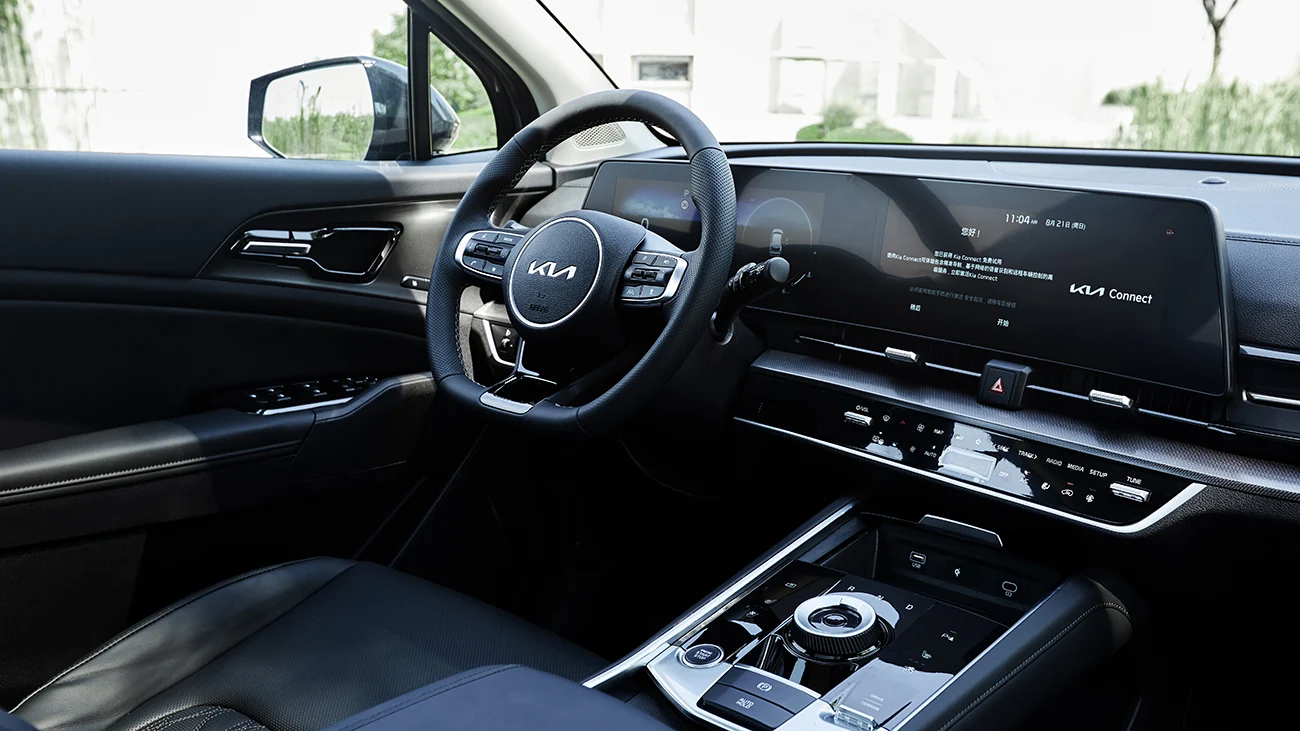
Define the real workday journey
Ask whether the car carries one employee, visiting clients or several staff, and which journeys are regular. State the usual number of adults and cases. The passenger arrangement guide helps distinguish the actual use from a general family-SUV description. Business use does not automatically require the highest trim.
Keep ordinary company travel separate from a locally regulated passenger service. The relevant destination parties should establish any operating requirements for that intended use. A suitable cabin arrangement does not prove permission to operate a business service. Avoid presenting a vehicle-fit observation as a licensing or registration assurance.
Review visitors' actual accommodation
Assess front and rear positions with the intended occupants in view. The rear adult-trip review keeps front-seat settings consistent. A tidy cabin photo cannot establish access or sustained comfort. Where a person has particular needs, seek an appropriate assessment rather than promising easy use for every visitor.
For used candidates, record passenger-area wear and disclosed work. For new proposals, verify the installed seats and delivery condition. Optional appearance should not conceal an unresolved basic function. The receiving business should understand the accepted presentation and limitations, not a universal executive-car claim made from a trim badge or manufacturer image.
Test bags with needed seats occupied
Use the usual cases or clear dimensional equivalents and retain required seating. The boot and luggage guide separates seats-up loading from extra room obtained by folding a passenger place. Show the loading sequence and normal closure rather than only the final favourable arrangement.
If occasional large loads exceed the accepted arrangement, ask whether another vehicle or a stated compromise is acceptable. Do not use smaller bags to approve a routine involving larger ones. Keep loading effort and supplied floor items visible. A published volume does not establish that all client luggage fits safely or that every airport journey can use the same arrangement.
Prioritise daily supported functions
Phone connection, climate control and parking functions should match the actual customer requirement. A modern display does not prove the receiving user's setup. The phone and account transfer review separates the seller's demonstration from the new user's supported arrangement.
Compare higher-trim benefits after preparation is considered. A simpler car can be relevant if it fulfils the routine; another candidate may be necessary when an essential remains unresolved. Do not promise a particular resale margin or lower company running cost from the model name. Obtain appropriate local inputs for the identified configuration and the company's actual route assumptions.
Record the use boundaries for each candidate
Retain adults, bags, parking and essential functions in a compact accepted brief. If the company wants several cars for different users, allow explicitly permitted variation while preserving common essentials. The matching and mixed order guide explains why each unit still needs its own record.
A substituted candidate must answer the same workday routine rather than merely match the colour. The final file should state which arrangement was assessed and what remains unconfirmed. This gives the dealer an honest explanation of suitability without claiming that every Sportage is an airport solution or that an ordinary vehicle review establishes commercial operating rights.
A visiting-team requirement
For a company regularly collecting three visiting adults and their bags, assess the passenger-and-load combination rather than approving the rear seats and boot in separate favourable setups. Keep the front driver's normal position and the required rear places occupied. If only a reduced arrangement is demonstrated, identify the missing part before choosing the car.
The same candidate may be adequate for a single staff member's daily visits, so preserve the intended assignment when ordering multiple units. A mixed fleet can make sense if each difference is clear. Do not convert that flexibility into permission to deliver any specification. The business should receive vehicles whose individual records explain the use they were accepted to serve.
Purchase decision notes
| What the evidence shows | How to proceed |
|---|---|
| Airport passengers and bags must travel together | Assess the complete arrangement instead of relying on folded-seat capacity or an empty cabin. |
| Different employees have different routines | Assign accepted vehicles against explicit use briefs while retaining common mandatory functions. |
| Commercial passenger service is intended | Obtain responsible destination guidance independently of cabin fit and condition checks. |
Keep these acceptance records
- Record the company's ordinary passenger and luggage routine, identifying which requirements are mandatory and which occasional loads or uses permit a stated alternative.
- Connect front positions, adult access and actual case dimensions in one assessment, without approving a trip through separate favourable empty-cabin and folded-seat demonstrations.
- Keep required phone, cooling and parking evidence alongside presentation findings, valuing useful supported functions rather than a prestige claim or the highest trim automatically.
- Retain the intended vehicle assignment and any responsible-party operating answer, keeping business fit separate from regulatory permission and requiring fresh evidence for a substitute.
Questions before choosing
Is Sportage automatically suitable for airport work?
No. Review the actual adults, cases, loading and relevant use requirements together.
Must a company choose a premium trim?
No. Value demonstrated useful functions after condition, preparation and customer needs are understood.